Thursday, 7 March 2013

Lesson # 14

Maximizing the use of Overhead projector 
and the Chalkboard

Overhead projector
The overhead projector is quiet, 'user-friendly' and clean and requires no technical knowledge or skill on the part of the person operating it, apart, of course, from the ability to change the lamps occasionally.

Weaknesses of the Overhead Projector


Unlike marker boards and chalkboards, overhead projectors require a small amount of maintenance. They are more likely to crack or break, so you must be very careful and always keep a spare bulb close at hand. Another disadvantage is that some teachers find the glare that is emitted from the overhead projector quite bothersome, even though this can be overcome by attaching a shade to the device.
is probably one of the most versatile and useful visual aids that has been made available to the modern-day lecturer. The overhead projector has long since replaced the traditional chalkboard as one of the main teaching aids and is used in lecture theaters and classrooms all over the world.

The overhead projector is quiet, 'user-friendly' and clean and requires no technical knowledge or skill on the part of the person operating it, apart, of course, from the ability to change the lamps occasionally.

Weaknesses of the Overhead Projector


Unlike marker boards and chalkboards, overhead projectors require a small amount of maintenance. They are more likely to crack or break, so you must be very careful and always keep a spare bulb close at hand. Another disadvantage is that some teachers find the glare that is emitted from the overhead projector quite bothersome, even though this can be overcome by attaching a shade to the device.


 CHALKBOARD TECHNIQUES
a. Sharpen your chalk to get good line quality.
b. Stand with your elbow high. Move along as you write.
c. Use dots as "aiming points". This keeps writing level.
d. Make all writing or printing between 2 and 4 inches high for legibility.
e. When using colored chalk , use soft chalk so that it can be erased easily.
  
Strengths of the Overhead Projector than Chalkboard

The overhead projector definitely has a number of advantages that would outdo most other visual teaching aids. For instance, a lecturer can use it in just the same way that he or she would use a chalkboard, but the biggest advantage would be that with the overhead projector, lecturers all over the world now get to face the whole class and maintain eye contact all times with their students instead of having to turn around and write. As a teacher, you would know that this eye contact plays a very big role in both facilitative as well as expository teaching, and serves both as a means of receiving feedback from the class on how good or bad the session is and as an outward non-verbal communication medium for the teacher.


If designed well and planned well, these overhead transparencies will provide all the aides and cues that are needed during a lecture, so that you don't have to resort to the conventional note taking. These overhead transparencies are fairly compact when you compare them with some of the other types of visual aids like charts and can easily be stored in boxes, folders, files, or large envelopes.
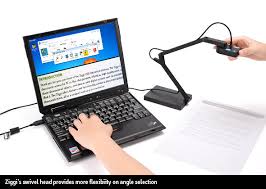

 But for me I use projector because its Essay to use Than Chalkboard....That all Thank YOu...........
 

Wednesday, 6 March 2013

lesson #13


     Teaching with visual  symbols                   


  Visual symbols will be made meaningful if we can use them as summaries of our own direct experiences or our own rich indirect experiences..... These lesson i learned that from an experience of real world experience we proceed to a world of symbols, Visual symbols includes drawings, cartoons, strip drawings, diagrams, formulas, charts, graphs, maps, globes. Like a picture, a graph and all other visual symbols, are worth a thousand words. The proper use of visual symbols will contribute to optimum learning.
 Kinds of Visual Symbols

  •  Cartoons

Cartoons tell stories metaphorically through pictures, which need no captions. Symbolism conveys messages, less words more symbolism the better. The cartoon presents a certain issue or concern which could be either for or against it.

It is a pictorial representation or caricature of a person, idea, situation or issue that is designed to influence public opinion. Therefore cartoons must be presented in a challenging manner. For better understanding they should be drawn around a single idea.
  • Suggestion for the use of cartoons

a. Appropriateness to experience level. The age and the experience or maturity of the target learners must be taken into consideration.


b. Simplicity – contains only the essential features. The cartoon must not contain so many details.

c. Brevity of captions if ever but they may not be given any. Short and direct captions are used when necessary only.

d. Use of clear symbols. Use symbols that are conventional, like; the dove to mean death; the turtle to mean slow or sluggishness and others.

e. Adequateness of size. The cartoon should be big enough to be seen and appreciated.

Cartoons could be used for motivation, for follow-up activity and for evaluation purposes. 
  • . Posters

A poster is combination of bold designs and color primarily intended to catch attention on a significant fact, idea or message. Simply stated, a poster is a picture with appropriate caption.

Characteristics of a good poster
  •  It must be bold and simple but dramatizes features.

  • . It must be appropriate to the grade level and to the subject and purpose and purposes.

  • . It must have only limited text, few words are generally used and key words are made to standout by means of type size or position.

  • . It must be attractive, pleasing to the eyes.

  • . Design and color must be given consideration.

  • Composition, color and technique are principal elements in effective poster preparation. It requires a center of interest. Color provides meaning and expression as well as beauty.

  •  It must have elements of dynamism and shock.

  • Posters are best used for motivation and for creative experience as depicting ideas, concepts and generalizations to summarize a celebration or a unit.
  • 3. Drawings and Sketches

These are crude and simple lines, which are effective in showing what needs to be shown with sufficient clarity, to make the meaning vivid to learners or students.

They are drawings with no illusion of depth but a smart teacher can use them in a very effective way in explaining and showing ideas and concepts.

4.Diagrams

Diagrams are simplified drawings designed to show interrelationship primarily by means of lines and symbols. They are used to explain rather than to represent. It is a drawing that shows arrangement and relationship, as parts to a whole, relative values, origins and developments, chronological flow, fluctuations and distributions.

The diagram is used to condense visual summaries of facts; the ideas rely heavily on symbolic means. However it must be remembered that it is more effective if it has a strong foundation because it works better for summarizing rather then introducing a lesson. It can be used singly but it is better if it is used simultaneously with other materials.

5. Charts

Charts are graphic or pictorial representations of a large mass of information or show progression thru time and space of people or events, ideas and objects.
                     
Kinds of charts 

  •  Data chart – contains items of information pf all sorts especially quantitative data.

  • Pictorial chart – use relevant pictures to present data or information on quantifiable data over a specific period or condition.
  • . Schematic chart – shows a principle or a law as applied like that of refrigeration

  • . Diagrammatic chart – verb chart is popular example 

  • . Multiple leaf chart – internal working parts of a machine

  • Phantom view chart – shows hidden parts of a machine without obliterating the outer parts

  •  Development or progress chart – profile of a place or a person

  •  Table chart – bus trips

  • Time and tabular chart – presidents and their term of office 

  • . Stream or tree chart – family tree

  •  Flow or organizational chart – school personnel chart, life cycle of a frog or the water cycle. 
. Graphs

Graphs present quantitative data for easier analysis and interpretation. It shows comparative relationship of data involved in size, trends and growth. Graphs are best used in developing and in summarizing a unit.

Kinds of graphs

  • . Line graph – is the most accurate of all graphs used in plotting trends of relationships between two series of data. It is used when there is a considerable number of data to be plotted and if these data are continuous

  •  Bar graphs – simplest of all graphs to read. They are represented either by vertical or horizontal bars. The lengths of the bars represent an amount or percentage data. It is best when number of values to be compared is small.

  • . Circle or pie graph – the sections of which are used to represent component parts of a whole. They always present total amounts, their parts or segments are calculated in percentage or fractional parts of a whole.

  • Area or Solid graphs – use for the simplest quantitative comparison thru the use of geometric shapes. It is used to compare two or three related totals.

  • 5 Pictorial Statistics or pictograph – it makes use of related pictures in showing quantitative data. Pictures give realism and interest so it is widely used specially in the elementary grades.

  • Principles of Pictographing

  •  Simplicity – picture used must be simple
  • . Comparison of relationship must be strikingly seen 
  •  Approximates rather than precise amounts are represented
  •  Pictorial symbols used must be self explanatory rather than by the size. Strip Drawing or Comic Strip

  • Strip drawings are recommended for their story value in adaptation of the classics. They are affective in instruction not only because they are simple, clear and easy to read but because they deal with materials that has been made personal.

  • Comics is a form of cartooning in which the same cast of characters form a story in sequence of closely related drawings, designed to entertain the readers. They are usually enjoyed by elementary pupils as well as secondary students because of their simplicity, attractiveness, color and relevant plot. The uses of super heroes or fantasy themes add interest to the learners. Thus the use of the comic strip in facilitating instruction must be used to the maximum.

  • Values derived from the strip drawings 

  • 1. Increases interest in the subject
  • 2. Individualizes and personalizes instruction for certain types of pupils
  • 3. Serves as a valuable practice in reading 
  • 4. Widens reading interest

  • Reasons for using comics strip


  • 1. It is easy to read so it encourages reading
    2. It builds vocabulary
    3. It satisfies the collectors’ interest in acquiring copies
    4. It provides excitement
    5. It is inexpensive
    6. It satisfies the children’s idea of art
  • 8. Maps

  • Maps are usually shown on flat surface and are used to represent the surface of the earth or some parts of it, showing the relative size and position according to scale or projection and position represented.

  • Maps according to content

  • a. Physical map – also called relief maps, they are the best because of their three dimensional representation; which includes geographical outline of land and water. Commercial or economic maps- also known as product or industrial map since they show land area in relation to the economy.

b. Political map – shows national boundaries down to the smallest division 
  • Maps according to form
  • a. Chalkboard outline map
    b. Student outline maps
    c. Projected maps
    d. Wall maps (decorative maps)
    e. Atlas – collection of maps
    f. Sand table map
    g. Pictorial maps
1. Visibility – details are clearly seen and read
2. Detail – less detailed maps are better
3. Scale – marks are clear, dependable and easily interpreted
4. Symbols – not too many to be remembered
5. Color – should be used as an aid to reading it
6. Accuracy – in terms of its specific purposes
7. Grade level relev
Standards in judging maps
ance
8. Print – is legible or readable
9. Durability – can stand several use


  • Purposes for which maps are being used


    1. To enable students to understand both relative and exact position of political units, land masses and political area.
  • 2. To furnish information concerning areas, distances, directions, shapes, size and relationships
  • 3. To provide orientation and means of visualizing large and remote areas
  • 4. To clarify materials
  • 5. To provide visual basis or comparison and contrast
  • 6. To provide means of regional synthesis 
  • 7. To provide interest and stimulation to learn more about people, geographical influences and places
  • 8. To enable students to trace movements, migration and distribution of people, vegetation, animal life and culture 
  • 9. To serve as one method of study for recording purposes
  • 10. To provide an ‘object test’ means for certain types of measurements
  • 11. To furnish means of self-expression in unit and project study.                                                       Points to remember in utilizing maps for teaching
  • . Make sure that the pupils or students comprehend the purpose of the map
  • . Promote or develop positive emotional attitude
  • Allow ample time for pupils’ first look
  •  Make sure they understand map symbolism


Wednesday, 27 February 2013

lesson #12


THE POWER OF FILM,VIDEO AND TV IN THE CLASSROOM


  • It combines both audio and visual. People can relate to it. Watching TV is effortless. When you listen to the radio, you still have to imagine visually what's going on. With TV, it's a complete package. It can bring you worlds you haven't been to in the comfort and safety of your seats or sofa or in the class. Come to think of it, it's even better watching the Story of ferry tyle on TV than being physically beside the ring because you get to see close-ups and slow-mo replays.
  • Being this powerful, why not use this tool in teaching? It keeps the attention of the students and retention is better with audio-visual tools. Before viewing, give your students a set of objectives and expectations in watching the film. Link the film with your lesson. Set house rules to prevent interruptions during the viewing process.
  • Through having this kind of technology in the classroom it can help both the teacher and the students in having the teaching learning process it is more effective concrete, colorful and having interaction with each other because it is a dual way process of communication. It could be helpful in many ways but in the other side it could be also a bane in which the people misuse and abuse this in using inside the classroom and even at home. The most significantly cited weakness of the TV is the effect of the TV violence on peoples aggressiveness behavior.  :)

Wednesday, 20 February 2013

Lesson # 11

Making the Most of Community Resources and Field Trips


  • .      procedures and criteria must be observe in planning and conducting field trips,,,,     

                In conducting a field trips we must follow a procedures or a steps to avoid the failed study trips,                  First is the preliminary planning by the teacher . 

 the teacher make a preliminary contacts to a tour on final arrangement with the place to be visited,
 The final arrangement with the school principal about the details of the field trips the second is the preplanned with the others going on field trips , taking field trips itself and the post field trip follow up activities.

The  4 steps in planning a field trips:

  •  First, Preliminary planning by the teacher, 
  • Second, Preplanning with others going ton the trips, 
  • Third, Taking the field trips itself and 
  • Fourth, Post-field trip follow up activities.


  • .  Educational benefits derived from field trips.
             Field trips can be fun and educational when they are well executed .

  •   The acquisition of lasting concepts and changes in attitudes are rooted on concrete and rich experience. Field trips are opportunities for rich and memorable experience which are fundamental to learning the last.
  

  • The real world connection is more work but the benefits of broadening teaching beyond textbooks far        outweigh the little bit of time it takes from a teacher's schedule.
  •   The field trip can nurture curiosity: build a zest for new experience and a sense of wonder".


  • .  community resources can be utilized in learning?
    As a place to visits  popular destinations are museums, zoos, botanical gardens , historical places places of exhibits scenic spots.Performances like a play , a concert, and a dance presentations also form part of community resources.

Wednesday, 13 February 2013

Lesson# 10

 DEMONSTRATIONS IN TEACHING


"Good demonstration is good communication."  Like dramatized experiences, demonstration is also something like very handy. It may not need deeper elaboration as the other When we just done it properly. Demonstration is another way of teaching which shows how a thing is done emphasizing the salient merits, utility and efficiency of a concept, a method or a process or an attitude. These are some guiding principles we must observe in demonstrating; first, establish rapport, avoid the COIK fallacy( Clear only if Known) and watch for key points. To ensure that demonstration works,we ought to plan and prepare very well our goals, materials needed, the steps and rehearse. a good demonstration is an audio- visual presentation. It is not enough that we only talk, it must be accompanied by some visuals.     


"Good demonstration is good communication." A good demonstration is an audio-visual presentation. It is not enough that the teacher talks. To be effective his/her demonstration must be accompanied by some visuals. to plan and prepare adequetly for a demonstration, we first determine our goals, the materials we need, our steps, and rehearse. In the actual conduct of the demonstration itself we see to it that we: 
  •  get and sustain the interest or our audience; 
  •  keep our demonstration simple, focused and clear; 
  •  do not hurry nor drag out the demonstration;
  •  check for understanding in the process of demonstration; 
  •  conclude with a summary and 6) hand out written materials at the end of the demonstration.

"

Wednesday, 6 February 2013

Lesson # 9


Teaching with Dramatized experiences

Dramatized experience can range from the formal plays, pageants to less formal tableau,pantomime ,puppets and role playing.


  • plays   it is depict life, character, or culture or a combination of all three. Pageants are usually community dramas that are based on local history, presented by local actors. Play and pantomime require much time for preparation and so cannot be part of everyday classroom program. While pantomime and tableaux compared to a play and a pageant are less demanding in terms of labor, time and preparation. These are purely visual experiences.
    •    Pantomime   is the art of conveying a story through bodily movements only.
    •  Its effect on the audience depends on the movements of the actors 
    • while tableau          is a french word which means picture it is a picture-like scene composed of people against a background. Dale claims 
    • that puppet   unlike the regular stage play, can present ideas with extreme simplicity without elaborate scenery or costume yet effectively. As  an instructional device the puppet show can involve the entire group of students as speakers of parts, manipulators of the figures and makers of the puppets.
                         There are types of puppet:
                       *Shadow puppets-   flat back silhouette made from lightweight cardboard and shown behind a screen
                      *Rod puppets- flat cut out figure tacked to a stick,with one or more movable parts, operated from below the stage level by wire rods or slender sticks
                     *Hand puppets- the puppet's head is operated by the forefinger of the puppeteer, the little finger and thumb being used to animate the puppet hands
                     *Glove and finger puppets- make use of old gloves to small costumed figure are attached
                      *Marionettes- flexible, jointed puppets operated by strings or wires attached to across bar an maneuvered from directly above the stage
                    
     Another form of dramatized experience is role-playing. Role playing is an unrehearsed, unprepared and spontaneous dramatization of a let's pretend situation where assigned participants are absorbed by their own roles in the situation described by the teachers. It can be done by describing a situation which would create different viewpoints on an issue and then asking the students to play the roles of the individuals involved
     ................................... thanks you Godlesssss..............more power :)